"Do we need a head of design?" is one of the most common questions I get from seed and Series A founders. Usually the real question is different: who makes the screens, and who decides what good looks like? Those are two jobs. At an early stage one person can do both, part time, and the title matters much less than which job you are short of.
Three roles, not two
The search results blur these together, so here is how I separate them.
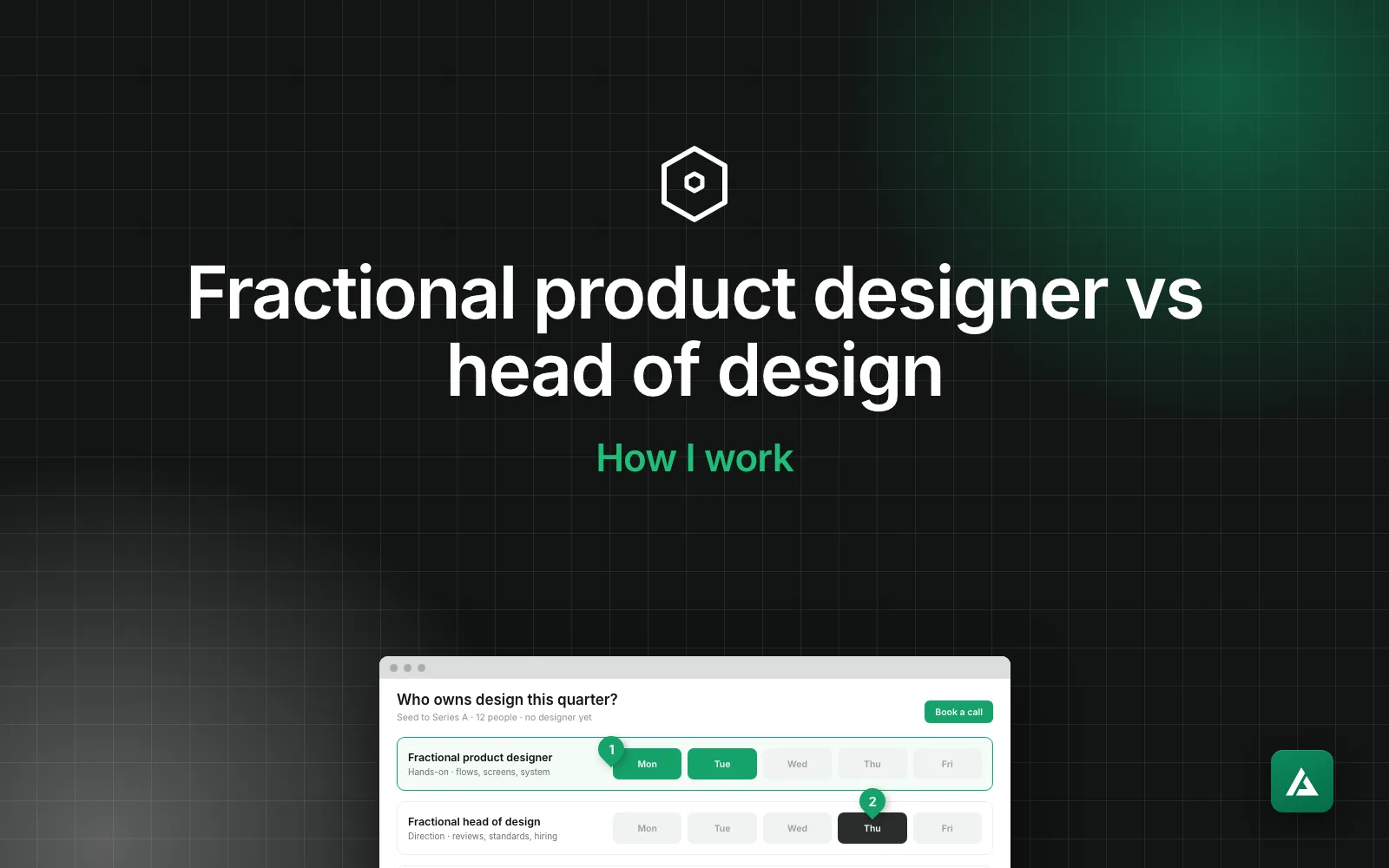
- Fractional product designer. Hands-on. Designs flows, screens and the design system for a fixed number of days a week, inside your tools. The output is Figma your engineers build from.
- Fractional head of design. Direction. Sets the standards, reviews what your designers or engineers produce, owns the design system, helps hire and onboard, and represents design in roadmap decisions. Some hands-on work, but less of it.
- Full-time head of design. Leads a design team. Hiring, process, career paths, design across several teams or products, and a seat in leadership. Rarely designs screens.
Side by side
| Fractional product designer | Fractional head of design | Full-time head of design | |
|---|---|---|---|
| Main output | Shipped flows, screens and a design system | Standards, reviews, hires and design input on the roadmap | A design team and the way it works |
| Hands-on design | Most of the time | Some of the time | Rarely |
| Manages people | No | Coaches one to three designers | Yes, usually four or more |
| Time | One to three days a week | One to two days a week | Full time |
| Stage it fits | Seed to Series A, no designer yet | Series A to B, junior or mid designers with no senior lead | Series B and later, a growing design team |
| Time to start | Days | A week or two | Three to six months of search |
On cost, a full-time senior product designer costs $14,000 to $19,000 a month in the US once salary, taxes and benefits are loaded in, and a head of design costs more, often with equity on top. Fractional roles cost a fraction of that because you only pay for the days you use.
Why a head of design is usually the wrong first hire
A head of design with no team to lead ends up doing one of two things. Either they design the screens themselves, and you are paying a leadership salary for senior individual work, or they build process for a team that does not exist yet. Neither is what a ten-person SaaS company needs.
Your first design hire should be someone who ships. Direction becomes valuable once there are designers to direct and enough product surface that standards start to matter.
Signs you need a fractional product designer
- You have no designer, so engineers design by default and the UI drifts with every feature, especially the AI-generated ones.
- The roadmap has more design work than your engineers can wait for.
- You have used project freelancers before, and their work decayed as soon as they left.
- There is not a full-time load of senior design work yet, but there is a steady part-time one.
Signs you need a fractional head of design
- You have one or two junior or mid-level designers and nobody senior reviewing their work.
- Design and engineering argue about quality because there are no shared standards.
- You are about to hire your first full-time designer and need someone to define the role, interview candidates and onboard the hire.
- A design system exists, but nobody owns it and it is slowly falling apart.
Signs you need a full-time head of design
- You have four or more designers, or a plan to get there within a year.
- Design is how you win against competitors, and it needs a voice in leadership every week, not two days a week.
- You run several products or teams that need one consistent design organisation.
At this point fractional is a bridge, not the answer. A good fractional lead will tell you so and help you hire the person who replaces them.
The path most SaaS teams follow
- Seed: a fractional product designer, hands-on, owning the product design end to end.
- Series A: you hire a first full-time designer, and the fractional role shifts from doing the work to reviewing it and owning the system. The same person can make that shift, which saves you the handover.
- Series B and later: a full-time head of design, once the team reaches four or five designers.
That middle step is how I work with most clients. The two days a week start as hands-on work and move towards direction as the team grows. My longest client relationship has run for eight years, across a rebrand and several products.
Questions to ask before you hire either
- Who will be in our Figma file every week, and can I meet them?
- What will you own after three months: the system, the roadmap, the hiring?
- What happens when we hire a full-time designer?
- Show me a product you have worked on for more than six months.
Questions founders ask
What does a fractional head of design do?
Sets design direction tied to product goals, reviews the work your designers or engineers produce every week, owns the design system, and helps hire and onboard your first full-time designers. Some hands-on design, but direction is the main job.
Is a fractional product designer cheaper than a full-time hire?
In cash, yes, because you pay for two or three days a week instead of five, with no equity, benefits or recruiting fees. It stops being cheaper when you have a full-time load of design work. At that point hire.
How many days a week does a fractional designer work?
Usually one to three. I work two fixed days a week with each client, so the team can plan around them, and can move to three with a month of notice.
Can a fractional designer become our full-time head of design?
Sometimes, but more often they help you hire one. The best outcome is a full-time lead who inherits a working design system, clear standards and a documented roadmap instead of starting from zero.
If the hands-on role sounds like your gap, here is how my fractional product designer retainer works: two days a week, inside your team, starting with an audit, then the design system, then the roadmap.