
GliaKit
One design system that lives in two places: a free Figma UI kit and a wired Next.js + shadcn boilerplate. Fifteen production screens in light and dark, tokens that map 1:1 to Tailwind, and AI rules that let Cursor and Claude Code build on-brand from the first prompt.
One system across Figma, code, and AI
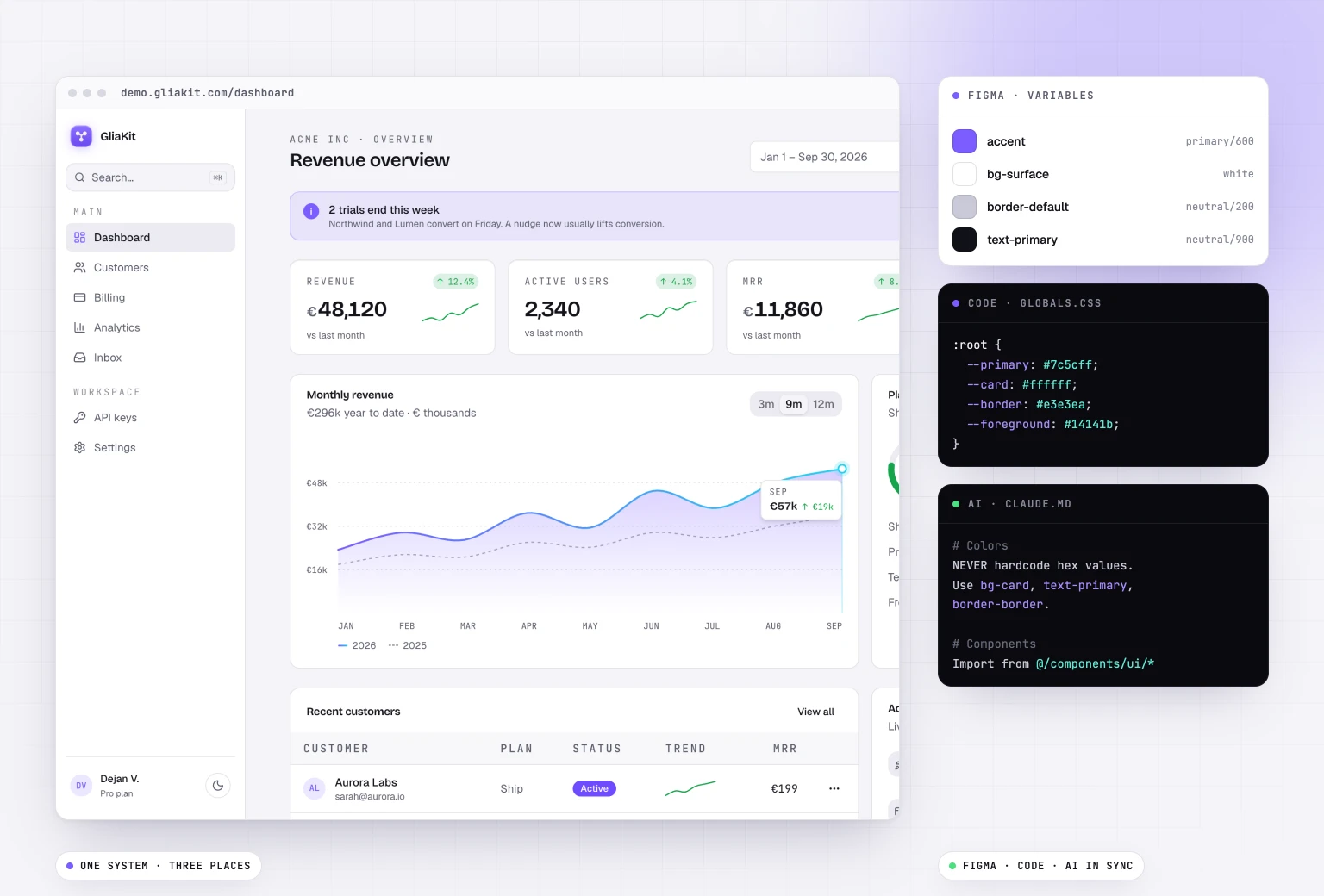
GliaKit is a commercial design system for people shipping SaaS products with AI coding tools. It is deliberately two products in one: a free Figma library that gets discovered and duplicated, and a paid Next.js + shadcn boilerplate that turns the same system into a running app - auth, payments, database, and email wired on day one. The bet is that the value isn't the components, it's the parity between design, code, and the AI tools building on top of both.
One token layer, light and dark
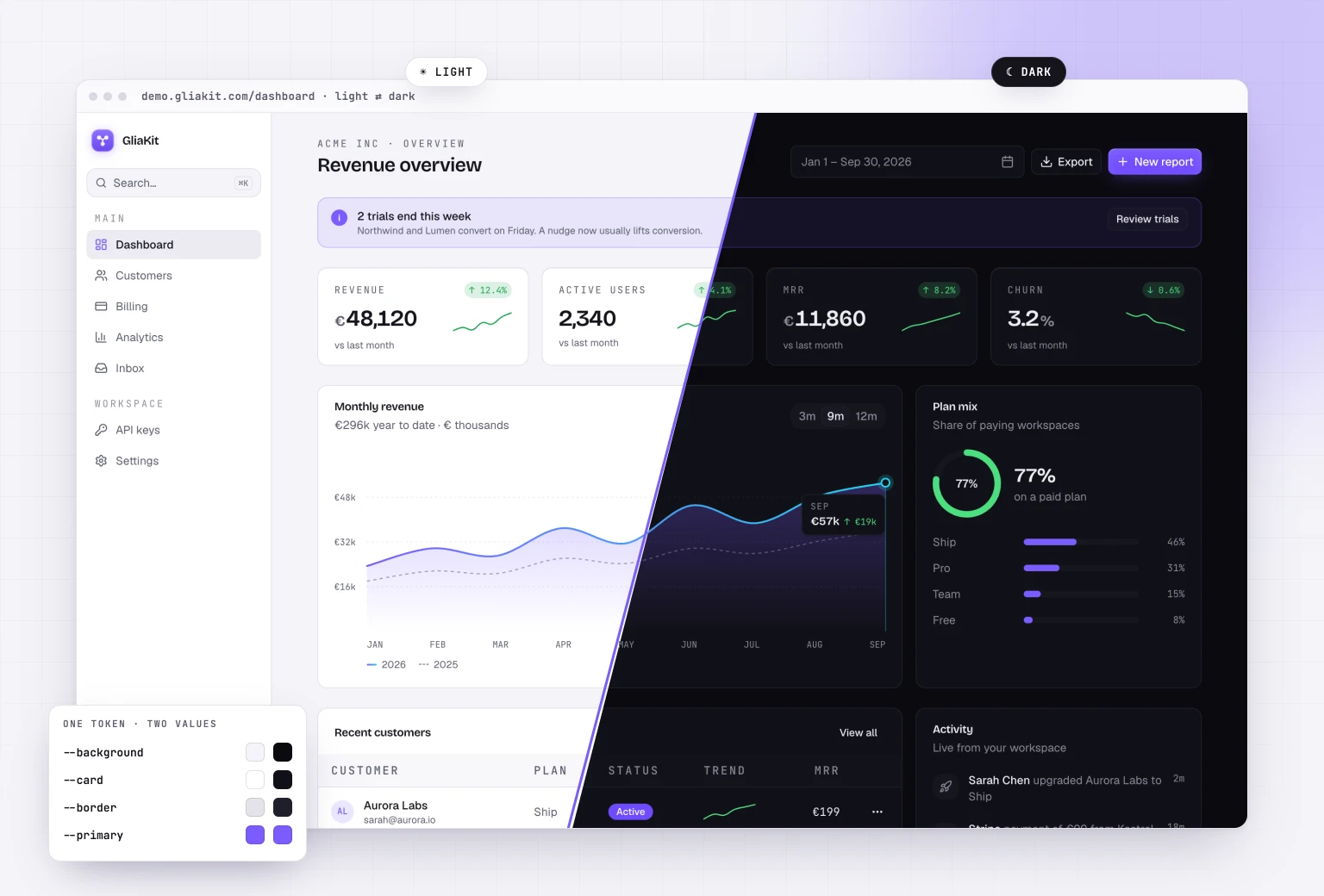
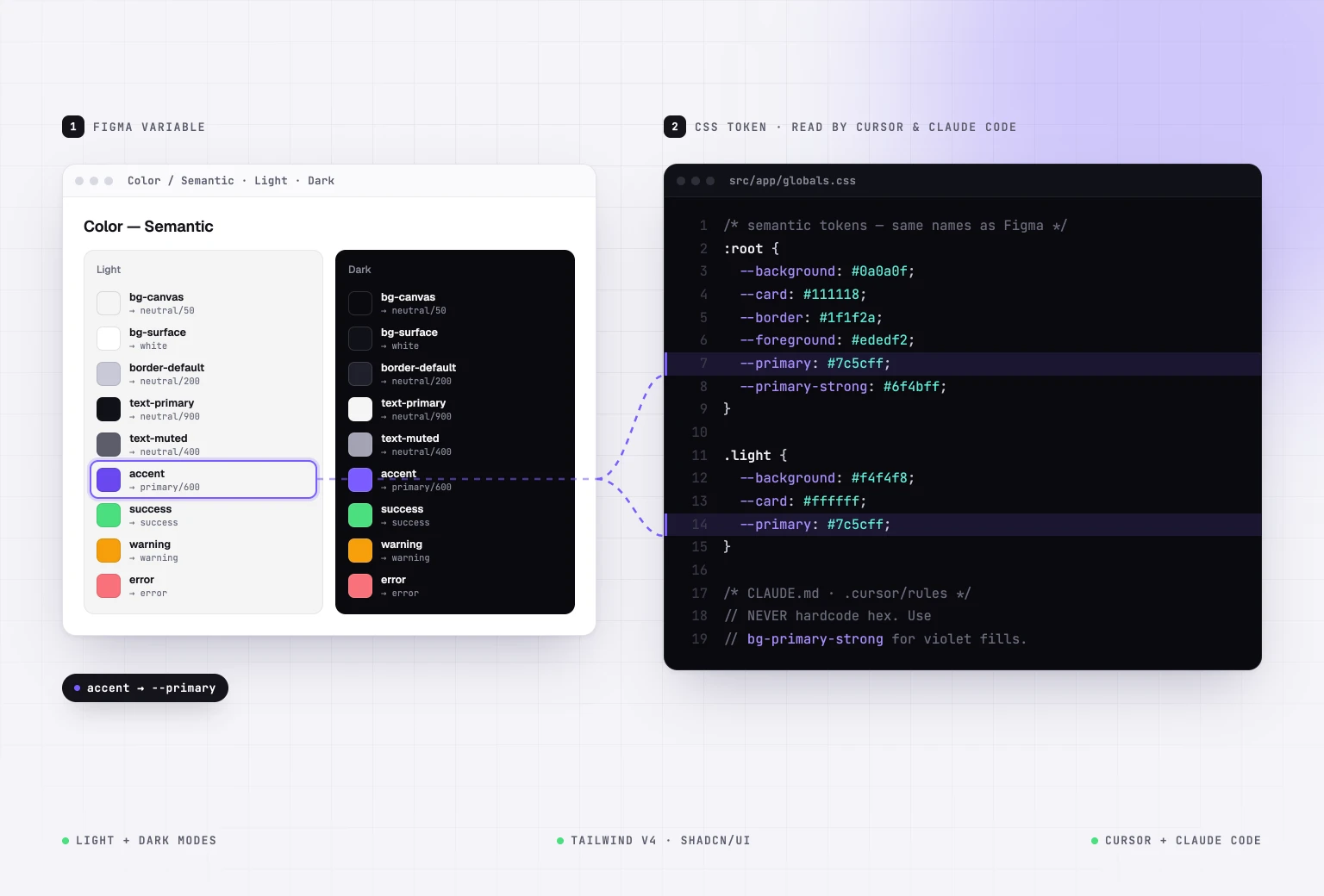
Every color, space, and radius is a Figma variable, not a hard-coded value. A semantic layer sits on top of raw primitives, so light and dark themes come from a single source of truth. Type, spacing, and effect styles are defined once and reused everywhere - the same discipline a production design system needs to stay consistent as it grows.
bg-primary, var(--background)),
so a variable reads the same in Figma and in the codebase.
Composed, never redrawn
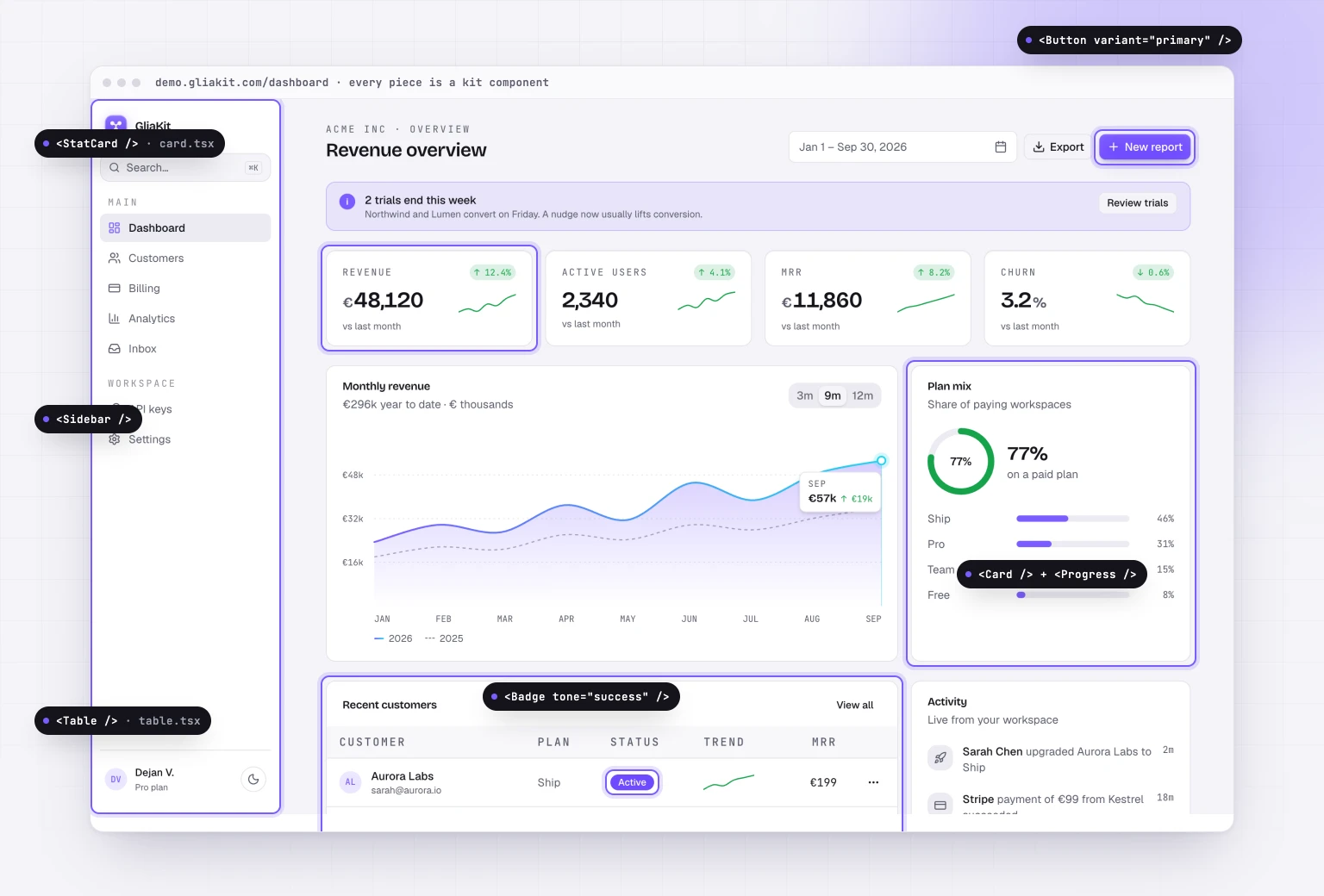
Every screen is assembled from the same base primitives - buttons, inputs, surfaces, tables - rather than drawn from scratch. That keeps fifteen production screens consistent, from dashboard, billing, and settings to auth flows and the AI-app patterns most kits skip: chat, streaming, agent steps, and tool calls. Change one token or variant and it ripples cleanly across every screen.
Maps 1:1 to the code - and the AI tools
GliaKit is named and structured to mirror how the code is actually built: tokens map to Tailwind, component names follow shadcn conventions, and the kit ships with rules files for Cursor and Claude Code plus a prompt library. The payoff is concrete - an AI coding tool references the existing system instead of regenerating it, so new screens come out on-brand and burn fewer AI-coding credits.
Need a production-ready design system or UI kit?
Book a free 20-30 minute call to discuss your design system, component library, or product UI.